Bringing Books to the People

Bringing Books to the People
The Book Bus

Aug 18, 2013

Eleven Kinds Of Lonliness by Richard Yates

'Cheerful' would be the wrong word to describe this, but then, you probably got that from 'Yates'. He's the Arthur Miller of the novel - profound, enlightening, insightful, addictive and utterly morose.

The most interesting aspect of this book is the way people are lonely without being alone. It's a discussion on the state of loneliness as a function of being misunderstood, or outcast in some way. When you can't see yourself reflected in your community, that's lonely. When you are part in something but not of something, that's lonely. These characters are almost more lonely when they're in company than when they create opportunities to be alone.

Can you be lonely when you're alone? It doesn't feel like it, reading this. In these stories it seems that loneliness is a feeling you can only really have when you're faced with the knowledge that despite being surrounded, you alone will face your past and your future. The act of presence you can enjoy in solitary moments is rarely something you can share.

Another review talks about this quite nicely, too - http://booksauce.wordpress.com/2011/07/14/review-eleven-kinds-of-loneliness/.

There is something incredibly satisfying about a well-crafted short story, and each of these is a delight. The characters, the places and the dialogue is thoroughly enjoyable, so much so, that I've finally picked up The Easter Parade on your recommendation, Nik. Just like the other review above, for me, the last story in the collection felt a little out of keeping with the others. I'm still kind of mulling over whether that one fits in and I certainly didn't enjoy it in the same way. Will report back on the Easter Parade! 

Jun 23, 2013

Rites by Sophie Coulombeau

DISCLAIMER - I adore the woman who wrote this book and the night before I started this blog post nearly a year ago, she'd just made me dinner. Also, this book has my name in the back. My copy also has a hand-drawn picture of a dinosaur in the prelim pages.

Here's a book about choices, and circumstance, and opportunity and icy-poles in Summer. The bravery, stupidity and calamity of adolescence where truth and duty begin to fray their edges - it's all here.

The way she writes about everything awkward, awful, harrowing and defining about growing up, you'd think she was the world's most articulate teenager. She might have been, but she's not any more.

I'm not going to say any more than this, except look out for her next one - you ain't seen nothin' yet.

Congratulations Soph.

x


The Poisonwood Bible by Barbara Kingsolver

This is such a more-ish book. Set in the Congo at the end of the 50s and starring a zealous Baptist missionary couple and there several daughters, this is brilliant.

The daughters and their mother take turns to narrate the story - a style I really enjoy when it's used well, as here. But the voice we never hear - that of their increasingly maniacal father - is omnipresent, dictating, essentially, the trajectory of the entire story.


This is a fascinating look at belonging and community, and destiny, faith and hope. You will love and hate the characters, but you will find your fate entwined with theirs and you will rip through the pages to save yourself.

The Finkler Question by Howard Jacobson

Here is a book about identity & friendship. It's wonderfully written & deeply amusing. All friendships instruct you in some way, make you who you are, but also reflect you by your choices. This portrayal of that interplay is truly thrilling.

Enjoy.

Apr 16, 2013

Gone Girl by Gillian Flynn

Speaking of cracked out, this book is more twisted than your nanna’s back. The chick-lit thriller of the moment, it’s a page-turner that I couldn’t put down (from an unofficial office straw poll of five workmates, they all smashed through it in the same way). It’s tight and more taut than Joan Rivers (alright I’ll stop with the bad analogies now). I can’t write much without giving the game away, but we start off by reading diary entries of the perfect Amy, about to celebrate her five-year anniversary with husband Nick. But the anniversary doesn’t happen when Amy inexplicably goes missing and the investigation turns to Nick. He then gets a turn at narrating, where we hear about his retrenchment from his dream magazine writing gig in New York, and he and Amy’s disappointment at having to move to his pokey home town in Missouri. Kernels of information are laid down by husband and wife, like a Hansel and Gretel trail of breadcrumbs leading to the truth. Of course there’s a humdinger of a plot twist which I won’t give away. It didn’t surprise me to read that it’s been earmarked for a movie adaptation, or that it flew off the shelves when it was released in mid-2012 (2 million copies and counting). It may not be literature but it shows that a good story is worth its weight in gold.

Enduring Love by Ian McEwan

This book is seriously cracked out. It starts innocently enough, although with a fairly grim scenario where four strangers in a field bear witness to a tragic hot air balloon accident where a man is killed. The group are now bound by the tragedy, with each man thinking they could have done something more to save him. One of the men, Joe, is a freelance science writer who lives with his girlfriend Clarissa in London. One day soon after the freak incident, one of the other men who was at the scene, Jed, calls him out of the blue, saying all manner of strange things: “I love you”, “I want to be with you” ‘we’re meant to be together”. Leaves dozens of messages on his answering machine. Turns up at his house at night. Watches him from street corners. Makes thinly veiled threats to harm Clarissa so they can be together. Everything bar boiling the bunny or leaving a horse head in the bed. Joe goes to the police who just think he’s making it up, and Clarissa starts questioning his mental state. It’s all the more unsettling for the unusual male-on-male stalker set-up, and for the fact that Joe has done nothing to attract Jed’s infatuation. I felt a bit strange at the end of the book … scratched my head a little, did some laps around the block, had more tea and still undecided on whether or not this was a thumbs up or down. An ambiguous answer for an ambiguous book.

The Street Sweeper by Elliot Perlman

Another reason to write these STRAIGHT AFTER READING THEM. Or at least make notes. I read this quite some time ago, and remember very much enjoying it, but in keeping with the title, will need to make some sweeping statements about my enjoyment of it. Elilot Perlman has been described as one of the great ‘humanist’ writers of our generation, able to conjure up characters across the spectrum of age, race, gender to explore big themes of loss, memory, grief and redemption. Previous novel Seven Types of Ambiguity was certainly epic in scale but didn’t quite deliver the emotional pay off it promised (and after 800 or so pages, that was quite annoying), and perhaps experience and maturity have helped make this, his third novel, a more complete story. Three men with chequered pasts are our protagonists; an Australian academic based in New York who has recently been dumped and rejected for tenure; an African-American janitor fresh out of jail and searching for his six-year-old estranged daughter; and a Jewish Holocaust survivor whose last wish in life is share what happened in the camps. Like a literary carnival fairy floss spinner, wispy threads of stories are spun and spun until their three stories become one. It feels like a lot of research and a lot of love went into this book, and while there may be some parts that feel a touch laboured, I thought as a whole it was quite moving.

Jan 8, 2013

The Chemistry of Tears by Peter Carey

Nik, I suspect you won't like this. It's very Peter Carey, if that's not too obvious a thing to say, and I don't really get the sense you're that much of a Carey fan?

Look, I read this a long time ago. But, as far as I recall: There's a grieving woman in a really awkward position - widowed ( do you say that about not-wives?) mistress of many years - and a sick boy with a misguided dad and complicated duck machine clock creature. They're separated by, let's say, a hundred + years and brought together by lovely old notebooks in old fashioned German.

There's a lot of talk about moving parts and mechanical junk which I found oddly intriguing. And, in a sense, this is a consideration of how all the tricky, big, small, obvious, fragile, intricate moving parts of us have to work together to perform what seem to be, when viewed from the outside, some pretty simple actions.

Jan 3, 2013

Grace by Grace Coddington

I love getting books for Christmas. People think they’re a boring present, but they’re so not. A bright orange hardback (a nod to the author’s shock of wiry henna-dyed hair methinks), this memoir is an airy, light read that was perfect for the summer break. Oh, what this lady has seen! And it was refreshing to read a biog that took place throughout the Sixties and Seventies by someone who could legitimately remember it all – no drugs or drink, just a document of a career dedicated to fashion. Young Grace grew up in Wales, moved to London when she 18 and started a successful modelling career, working with the likes of Norman Parkinson and David Bailey. Back in the day, models were expected to do their own hair and make-up and carry with them a bag of accessories to dress the clothes (as well as show up to island shoots a week in advance so they could work on their tan). Life was simpler, and it’s amazing to compare the shoots of yesteryear with those of today, with hundreds of minions doing the work of a handful. Along with weddings, babies and anything else you can affix a price tag to, somewhere along the line, fashion grew into a massive industry and this is where this book holds the most interest. Some will be disappointed that there is not one bit of dirt in the book (though she does hint at Madonna and Puff Diddy being difficult people to work with, like that was some kind of unexpected revelation) but again, it’s refreshing. This is a woman who has built a long-standing and respected career simply by being herself and excellent at what she does, and that is a book worth reading.

Everything ravaged, everything burned by Wells Tower

More short stories, but read about six months ago ... all I can remember is sharp writing of displaced Americana, disturbing vignettes of children being abused at fun fairs by strange men, mean stepfathers in dry, arid landscapes finished off with a very odd and ultimately unreadable story about Vikings. Yes, Vikings. A very good debut, but many of these stories felt like they had bigger narratives - like Tower's was trying to squish a tennis ball into a toaster (bad analogy, but it doesn't fit, does it?) I wonder, did this collection start as a novel and become a collection of small ones? Among authors, are short stories like primary school and full lengths their high school equivalent? Do short story writers have little man syndrome? It didn't surprise me to find that since this was published in 2009 that Tower has gone on to write extensive features for GQ magazine, his style seemingly more at ease with this form of reportage. Tower's sentences were sparse but dead on in their accuracy of their target, and each page creaked like an old rocking chair on a porch, until the end came, like dust.

The Young Atheist's Handbook by Alom Shaha

Rarely do I buy a book just on its looks; but the cover of this one (gold embossed art deco font on the most tactile aqua stock) coupled with its intriguing title, winked at me knowingly from the shelves. Buy me, it whispered. So I did, and was very pleased with the results. It starts with the explosive act of the formerly Muslim author eating bacon, and from there breaks down the faith he was brought up with by using science to refute many of its claims. Shaha was born in Bangladesh but raised in London, to a mum with mental illness, a disabled brother and a gambling father on a council estate – not an excellent combination. But he sought refuge in books, got a scholarship to a posh boys school and worked his butt off to make himself an educated man. And it is this sense of mental curiosity and not taking anything for granted that has led him to explore and question the faith bestowed on him. He bucks the notion that because you were born in a certain part of the world, to people of a certain race or nationality, that you then must automatically take on those values blindly and pass them onto your children and their children.
Some will think that the arguments he makes are overly simplistic, but I think he’s cleverly aimed this book at a younger audience (hence the title) so it makes a very complicated point of view more easily digestible. It’s a conversation, rather than a sermon - a possibly very deliberate tone considering the subject matter.

This is how you lose her by Junot Diaz

Whaaaat? A book review? Here? On the book blog? Hold onto your seats people (audience of one). Something happened in 2012, where I read a lot of trashy magazines at airports between Sydney and Melbourne, and sometimes slept with a puppy on my head. Both of these circumstances make reading a bonafide book difficult. The release of a new Diaz propelled me out of my book funk and straight to the register. I thought Oscar Wao was genius, and opened the first page with high expectations. Fifteen or so pages I realised…..hang on, these are short stories. I felt ripped off, angry, doubtful (there are some great short story writers out there but also some god-awful ones). Thankfully, Diaz turned out to be the former rather than the latter. Yunior again is our narrator, and he weaves in and out of stories that are connected but not chronological. The characters are desperately in love, desperate, often poor and treat each other poorly – like how a lot of the world lives. I find it interesting when people refer to urban stories as “gritty” when really, they’re just writing about how life is (are people that read books really that middle class?) These stories are ripe with life, joy, death and I jumped greedily from one to the next. Highly, highly recommend – and to find out more about the man and how this book was a bitch to write, check out this interview here.

Jul 28, 2012

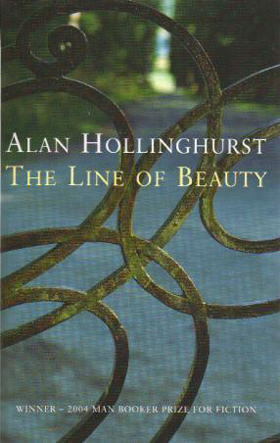
The Line of Beauty by Alan Hollinghurst

Homos and Margaret Thatcher in a book hefty enough to act as a weapon when concealed in a handbag? Don't mind if I do.

Let me break it down for you: 80s; White collar gay boy goes to Fancy University where he meets adobs straight rich boy; Moves into London house of said boy's family as lodger; Daddy of said boy is MP in gay boy's patch. Complicated.

Wow. If only all vastly complex, intimately nuanced Booker prize-winning novels could be described like that, 'eh? Maybe they should make that a criteria on the entry form or something.

So anyway. This is a very London book - jaunts on Hampstead Heath, coke in bathrooms, cycling in traffic, canoodling in Chelsea, mischief in Notting Hill, keyed gardens, riding the bus - it's all there. I guess if I was into dogging and loaded blokes this might be like reading Monkey Grip. Alas.

God, I don't know why I'm finding it so hard to express that I absolutely loved this book. From page 1, it's tits on a bull obvious that this isn't going to end well. Truly, you can see the tragic writing on the wall from a mile off. Let me be clear here: this is not a problem, it just means you are, step by step, watching a train crash. And falling in love with all the passengers even as the impact throws them out of their seats.

It's beautiful.


What I Loved Siri Hustvedt

Warning - tear-jerker. That's a warning for anyone other than Nicole reading this, unlikely, as she clearly already has. 
What's interesting to me though is that in both of these books (this one, and the one you just blogged about) the woman has to leave the relationship and the home to grow & change. What do you reckon that's about? I mean, completely different circumstances by the sounds of it, but it's like that archetypal storyline in children's fiction where the parents are somehow 'not there', either the kids go to boarding school, or it's Summer holidays, or whatever, but this lets things happen, creates the space for a-typical events to take place. 
This story interested me from the point of view of the young man, actually. Kind of a ridiculous thing to say, since I guess the whole book is about how your point of view frames everything - truth, love, art - without you being able to really do a single thing about it, even in the unlikely event you're aware of its influence. Anyway, yes - Mark. Fascinating. What to take from this? That having 3 parents will really mess with your juju? That everyone who wore fluro was a monster? I don't know, but there was a lot, I felt at the end, that was unresolved with that character. 

This was my first Hustveldt, so I guess I'm going to be looking to you, Lovelock, for where to go next, ploise.

The Hare With Amber Eyes: A Hidden Treasure by Edmund de Waal


Here's a book disguised as a book about a tiny white ceramic rabbit which is actually about THE ENTIRE WORLD. Well, ish. 

Edmund de Waal is, apparently, a well famous potter. I guess however famous you are for potting (?) I'm going to be far too philistine to have ever heard of you. But, be that as it may, what I'm getting at here is that despite having put together a truly incredible, captivating book, that's not even his real job. But then, I guess a potter writing a book about a tiny white ceramic rabbit makes, I guess, more sense than a carpenter doing it.

This book charts the journey of a set of these tiny objects - Japanese netsuke - from where Edmund's distant relative bought them in Paris in the 1870s to Edmund's London home today. So what? So what?! These little guys - essentially a really old Japanese belt keepers - accompany a Russian Jewish family through Paris, Vienna, Czechoslovakia, back to Japan and then onto London, taking in some of the most vitriolic anti-immigrant, anti-Jewish sentiment, seeing the rise and fall of a fortune, witnessing incredible wealth, indecipherable suffering and cataclysmic change. They are toys, curiosities, emblems, talismans, treasures.

Also, there's a family tree in the front, and I really like that junk.

You need to be able to devote yourself to this a bit - it's non-fiction with people and places and names and events you're going to want to keep track of - but it's absolutely worth it.

Jul 3, 2012

You'll be sorry when I'm dead by Marieke Hardy

You will either LOVE this book, or you will FUCKING HATE IT. Some chapters, I switched between huge snorts of laughter to being semi-disgusted at her conduct, which has been pretty shady at times. I admire that Hardy has no filter (even employing quite an endearing mechanic where she writes about an episode involving someone else, be an ex-lover or a bestie, and then gets them to write their side of the story). They don’t always match up, so it’s fascinating exercise in memory and how we like to write our own histories. It’s pretty admirable but can also be way over-sharing. And this is a girl that likes to over-share. Over-sharing is her stock in trade. Often it’s backed up by hilarious anecdotes about being a borderline alcoholic with a penchant for bad boys in Melbourne bands during the Noughties. Does it seem a little premature for her to essentially be writing her memoirs to date? Just a tad. Has she achieved a lot for her young years? For sure (see her Women of Letters project) Does she come off like a petulant adolescent at times? Totally. Do I think she gives a toss? Not likely. Life
would be boring without firecrackers like her going off at random … I’m just kind of glad that I don’t have to deal with her at 2am on a Sunday night.

The Summer without men by Siri Hustvedt

Another one of my favourite writers; she of What I Loved (which was creepy and awesome and confusing) and The Sorrows of an American (unnerving and suspensful) but this sadly, was not my favourite book. I find her writing in this to be a little overwrought, or maybe over-thought, like she was trying to prove how smart and erudite sh
e is. Making a massive assumption on someone whom I’ve never met, I’d put money on her being fiercely intelligent, likes to fight with her husband after a glass of red too many and slightly high-strung. I like these women but she seems high maintenance (is this being sexist? I’m sure I could say the same of male writers – Franzen would be slightly off kilter for sure. Eggers, definitely). Can you make this judgement based on their writing? I point to cases of some other favourite female writers and say yes: I’m looking at you Joan Didion and Lily Brett. Anyway, back to the book. Man cheats on wife of many years with a young Frenchie, woman rents a house out of town and teaches a writing class for teenage girls, makes friends with the young neighbour and her family, gets visits by daughter, sees shrink, husband asks for wifey back at the end. No-one gets blown up, there is not much action, just the slow breakdowns and build-ups of human relationships. The whole thing is a little bit plodding, a little bit “let’s spend time in psychoanalysis land”, but there are rays of sunshine. Like when she as the teacher spends time with the bratty teenagers as they turn on each other (bought back many memories) and her friendship with her mum’s subversive nursing home buddy Abigail, who reminded me of my Gran. The rest is….mas o menos.

The Marriage Plot by Jeffrey Eugenides

Oh Mr Eugenides, you make me swoon with your literary smarts; your witty pop-culture references; your cliché-free relationship observations and your general cleverness. Now might not be the time to tell you that I never read The Virgin Suicides I thought maybe the praise was just a tad over the top. But you’ve really got me with this one.
Leonard. Never has a character with such an unsexy name been so captivating. Immeasurably flawed, hilariously depressed, unaccountable for his dastardly actions and constantly over-worked brain, he is one of modern literature’s most brightly coloured protaganists. He made me laugh out loud and cringe inwardly with every awkward incident. His long-suffering girlfriend (and maybe too long-suffering in the end for my tastes) Madeline is writing her thesis on “The Marriage Plot” which lies at the heart of many of Austen’s novels. She is a book lover, and I love reading novels that are self reflexive like that – ones that are nodding to the books that the author has been read, shaped by, appreciated to get to the point where he/she is writing one themselves. Then crazy Mitchell rounds out this love triangle, and the ending is neither treacly nor expected. And the whole book is just exceptionally clever and sparky and kind of amazing. I would put it up there with A Visit from the Goon Squad as being in my top five of the past five years. You can listen to an excellent podcast of Eugenides in conversation with the ABC's Books and Arts program here

Before I go to sleep by S.J Watson

Is it compulsory to have just your initials instead of your full name if you’re a crime writer? All signs point to yes. The premise of this book really got me in the store: woman wakes up next to a man she doesn’t know, has to read her journal to piece together that she has amnesia from a car accident, doesn’t recognise her husband but knows something is not quite right. I don’t read them often, but I am totally partial to a good thriller. This did not quest my thrill thirst though. It builds in a nice, unsettling way but the pay-off left me feeling decidedly short-changed.

Mar 25, 2012

A Fraction of the Whole by Steve Toltz


The first 60 pages of this book were unstoppable. And from there, it descended into a kind of Shantaram-/The Killing-style chaotic, unplanned, rambling, self-absorbed twaddle. Obviously that didn't stop me from reading it, but by the end I did want to write the guy an invoice for the hours of my life I spent reading this and will never recover.

The question of 'must I become my father/how do I step out from the shadow of my father and then crawl out from under the weight of my sumo-sized uncle?' and 'is there any such thing as 'good'?' are all worthy of a discursive narrative, but the characters in this book are too utterly ridiculous for any fruits of this pondering to have any credibility.

In a Shantaram-tastic way, some of the stories in this book are utterly brilliant. But it's like how simply wearing all your favourite clothes at once does not necessarily an outfit make. Countless people (those who short-listed for the 2008 Man Booker Prize, to name a few) disagree with me about this, but clearly they are wrong got something out of this that I didn't. Good for them.

Sorry dude, no dice.