Bringing Books to the People

Bringing Books to the People
The Book Bus

Jan 8, 2013

The Chemistry of Tears by Peter Carey

Nik, I suspect you won't like this. It's very Peter Carey, if that's not too obvious a thing to say, and I don't really get the sense you're that much of a Carey fan?

Look, I read this a long time ago. But, as far as I recall: There's a grieving woman in a really awkward position - widowed ( do you say that about not-wives?) mistress of many years - and a sick boy with a misguided dad and complicated duck machine clock creature. They're separated by, let's say, a hundred + years and brought together by lovely old notebooks in old fashioned German.

There's a lot of talk about moving parts and mechanical junk which I found oddly intriguing. And, in a sense, this is a consideration of how all the tricky, big, small, obvious, fragile, intricate moving parts of us have to work together to perform what seem to be, when viewed from the outside, some pretty simple actions.

Jan 3, 2013

Grace by Grace Coddington

I love getting books for Christmas. People think they’re a boring present, but they’re so not. A bright orange hardback (a nod to the author’s shock of wiry henna-dyed hair methinks), this memoir is an airy, light read that was perfect for the summer break. Oh, what this lady has seen! And it was refreshing to read a biog that took place throughout the Sixties and Seventies by someone who could legitimately remember it all – no drugs or drink, just a document of a career dedicated to fashion. Young Grace grew up in Wales, moved to London when she 18 and started a successful modelling career, working with the likes of Norman Parkinson and David Bailey. Back in the day, models were expected to do their own hair and make-up and carry with them a bag of accessories to dress the clothes (as well as show up to island shoots a week in advance so they could work on their tan). Life was simpler, and it’s amazing to compare the shoots of yesteryear with those of today, with hundreds of minions doing the work of a handful. Along with weddings, babies and anything else you can affix a price tag to, somewhere along the line, fashion grew into a massive industry and this is where this book holds the most interest. Some will be disappointed that there is not one bit of dirt in the book (though she does hint at Madonna and Puff Diddy being difficult people to work with, like that was some kind of unexpected revelation) but again, it’s refreshing. This is a woman who has built a long-standing and respected career simply by being herself and excellent at what she does, and that is a book worth reading.

Everything ravaged, everything burned by Wells Tower

More short stories, but read about six months ago ... all I can remember is sharp writing of displaced Americana, disturbing vignettes of children being abused at fun fairs by strange men, mean stepfathers in dry, arid landscapes finished off with a very odd and ultimately unreadable story about Vikings. Yes, Vikings. A very good debut, but many of these stories felt like they had bigger narratives - like Tower's was trying to squish a tennis ball into a toaster (bad analogy, but it doesn't fit, does it?) I wonder, did this collection start as a novel and become a collection of small ones? Among authors, are short stories like primary school and full lengths their high school equivalent? Do short story writers have little man syndrome? It didn't surprise me to find that since this was published in 2009 that Tower has gone on to write extensive features for GQ magazine, his style seemingly more at ease with this form of reportage. Tower's sentences were sparse but dead on in their accuracy of their target, and each page creaked like an old rocking chair on a porch, until the end came, like dust.

The Young Atheist's Handbook by Alom Shaha

Rarely do I buy a book just on its looks; but the cover of this one (gold embossed art deco font on the most tactile aqua stock) coupled with its intriguing title, winked at me knowingly from the shelves. Buy me, it whispered. So I did, and was very pleased with the results. It starts with the explosive act of the formerly Muslim author eating bacon, and from there breaks down the faith he was brought up with by using science to refute many of its claims. Shaha was born in Bangladesh but raised in London, to a mum with mental illness, a disabled brother and a gambling father on a council estate – not an excellent combination. But he sought refuge in books, got a scholarship to a posh boys school and worked his butt off to make himself an educated man. And it is this sense of mental curiosity and not taking anything for granted that has led him to explore and question the faith bestowed on him. He bucks the notion that because you were born in a certain part of the world, to people of a certain race or nationality, that you then must automatically take on those values blindly and pass them onto your children and their children.
Some will think that the arguments he makes are overly simplistic, but I think he’s cleverly aimed this book at a younger audience (hence the title) so it makes a very complicated point of view more easily digestible. It’s a conversation, rather than a sermon - a possibly very deliberate tone considering the subject matter.

This is how you lose her by Junot Diaz

Whaaaat? A book review? Here? On the book blog? Hold onto your seats people (audience of one). Something happened in 2012, where I read a lot of trashy magazines at airports between Sydney and Melbourne, and sometimes slept with a puppy on my head. Both of these circumstances make reading a bonafide book difficult. The release of a new Diaz propelled me out of my book funk and straight to the register. I thought Oscar Wao was genius, and opened the first page with high expectations. Fifteen or so pages I realised…..hang on, these are short stories. I felt ripped off, angry, doubtful (there are some great short story writers out there but also some god-awful ones). Thankfully, Diaz turned out to be the former rather than the latter. Yunior again is our narrator, and he weaves in and out of stories that are connected but not chronological. The characters are desperately in love, desperate, often poor and treat each other poorly – like how a lot of the world lives. I find it interesting when people refer to urban stories as “gritty” when really, they’re just writing about how life is (are people that read books really that middle class?) These stories are ripe with life, joy, death and I jumped greedily from one to the next. Highly, highly recommend – and to find out more about the man and how this book was a bitch to write, check out this interview here.

Jul 28, 2012

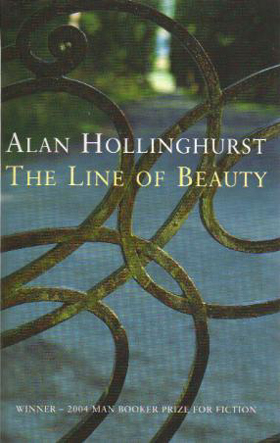
The Line of Beauty by Alan Hollinghurst

Homos and Margaret Thatcher in a book hefty enough to act as a weapon when concealed in a handbag? Don't mind if I do.

Let me break it down for you: 80s; White collar gay boy goes to Fancy University where he meets adobs straight rich boy; Moves into London house of said boy's family as lodger; Daddy of said boy is MP in gay boy's patch. Complicated.

Wow. If only all vastly complex, intimately nuanced Booker prize-winning novels could be described like that, 'eh? Maybe they should make that a criteria on the entry form or something.

So anyway. This is a very London book - jaunts on Hampstead Heath, coke in bathrooms, cycling in traffic, canoodling in Chelsea, mischief in Notting Hill, keyed gardens, riding the bus - it's all there. I guess if I was into dogging and loaded blokes this might be like reading Monkey Grip. Alas.

God, I don't know why I'm finding it so hard to express that I absolutely loved this book. From page 1, it's tits on a bull obvious that this isn't going to end well. Truly, you can see the tragic writing on the wall from a mile off. Let me be clear here: this is not a problem, it just means you are, step by step, watching a train crash. And falling in love with all the passengers even as the impact throws them out of their seats.

It's beautiful.


What I Loved Siri Hustvedt

Warning - tear-jerker. That's a warning for anyone other than Nicole reading this, unlikely, as she clearly already has. 
What's interesting to me though is that in both of these books (this one, and the one you just blogged about) the woman has to leave the relationship and the home to grow & change. What do you reckon that's about? I mean, completely different circumstances by the sounds of it, but it's like that archetypal storyline in children's fiction where the parents are somehow 'not there', either the kids go to boarding school, or it's Summer holidays, or whatever, but this lets things happen, creates the space for a-typical events to take place. 
This story interested me from the point of view of the young man, actually. Kind of a ridiculous thing to say, since I guess the whole book is about how your point of view frames everything - truth, love, art - without you being able to really do a single thing about it, even in the unlikely event you're aware of its influence. Anyway, yes - Mark. Fascinating. What to take from this? That having 3 parents will really mess with your juju? That everyone who wore fluro was a monster? I don't know, but there was a lot, I felt at the end, that was unresolved with that character. 

This was my first Hustveldt, so I guess I'm going to be looking to you, Lovelock, for where to go next, ploise.