Bringing Books to the People

Bringing Books to the People
The Book Bus

Aug 28, 2011

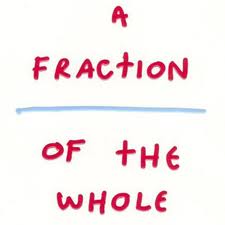
A Fraction of the Whole by Steve Toltz


Urrrrgh. I blame this book for the blogging malaise of late. I started this book in mid-June and gave up, halfway through, about six weeks later. I JUST DID NOT CARE. And by halfway, I mean I read 300 pages and still did not persevere. I can’t quite put my finger on why I was so disinterested. Am putting this in the You Win Some, You Lose Some book basket.

Aug 2, 2011

The Tax Inspector by Peter Carey


You couldn't argue that it's a catchy title, that's for darn sure. I know you didn't get much out of Oscar & Lucinda, Nik, and this wasn't my favourite Carey (I think that gong goes to My Life as a Fake), but it was a pretty amazing novel for a couple of reasons:

1. It's set in a car yard
2. One main character is a pregnant tax inspector, the other is a frustrated wannabe teenage car salesman
3. It made me homesick with a reference to Dandenong (however, I was listening to Paul Kelly at the time and I do not have a heart of steel)

The characters are so unnerving, and the setting so vile, that it's hard to know how to feel about them from page to page. This novel is about defining your relationship with change and decay - do you cede to it, embrace it, reverse it, create it, wallow in it, become one with it, or rise above it? It's about the country being swallowed by the city, it's about the past being lost to the present. It's about honour.

It's a quick read, which will, somehow, make you long for the smell of rain on cement, the sight of a pile of tyres, the sound of a big chicken wire gate scraping across a driveway, and taste of a burnout in your mouth.

Jul 31, 2011

Birdsong by Sebastian Faulks


There are authors whose name you hear enough times that you think, 'I must've read something by X, surely?!', but then you're forced to conceded that in fact, you've done no such thing. Sebastian Faulks is a perfect example of this for me. It's weird - he hasn't won loads of awards or anything, but there was a period early on when I was in London that his name was just everywhere. I guess it's not about winning awards, it's about having a marketing team who get your name on everyone's lips. And to that end, well done Sebastian Faulks' publishers.

Not that this is undeserved, however. Birdsong is a very well-crafted novel with round, whole characters and an unfaltering sense of place. It's ambitious, but successful in its breadth - there is an intelligent conversation in this work about violence, betrayal, loyalty and love. Each of these is laid before you both on the scale of the individual and the global, and it's curious to see that they are both equally devastating.

This is a very moving saga/drama/war bonanza and I highly recommend it.

Jun 12, 2011

The Private Lives of Pippa Lee by Rebecca Miller


You know those books that once you put them down, you take a step back and think ‘That shit was whack”? This, dear friends, is one of those books. There were some deeply disturbing and disquieting scenes that hinted and suggested deep dysfunction rather than told you everything, and that sometimes is more effective than spelling out the awful truth.

It’s a book that dismantles the notion of fulfilled relationships, and looks under the carpet where people sweep their disappointments and deepest regrets to create a big stinking pile of sad dust. Pippa Lee is a complex woman, married to an older man who has ‘tamed’ her – but is it just an act? Is the whole wife and mother act just pretence? And the bigger question is – do all women feel this way, trapped and dishonest in their roles as wife and mother? Do their real selves cease to exist once you have children? Yep, told you it was whack.

There are some fascinating relationships and characters in Miller’s debut work, and while not all are fully formed (the ending for example is wrapped up in a ridiculously short fashion – a sign of an over zealous editor or an out-of-ideas author?) it’s very commendable for going to some dark and interesting places when it could have quite easily become chick lit twaddle.

The Two Mrs Grenvilles by Dominic Dunne


This book is the literary equivalent of ordering a dirty martini from an old school Manhattan bar (yes Amber, I’m thinking of The Algonquin and that chilli martini and the old men in their ties with the napkins. Take me back NOW).

Dunne is totally old school, a writer who wrote for Vanity Fair for decades when there was no demarcation between the stars and the writers, and paparazzi was not a dirty word. Set in 1940s New York, showgirl Ann Arden mets Billy Grenville, a young rich and directionless heir who falls in love with her mystique and wild ways. They marry, much to the disdain of Billy’s family who can spot Ann’s social climbing ways a mile off, and simultaneously bring her into the family while keeping her at arm’s length. Ann is a willing student of the school of snobbery, and turns into the very person Billy thought she was not. Throw in some fabulous parties and the mother-in-law from hell and you have a very absorbing read.

It’s full of bitchy comments and snarky observations on the elite, and those who compromise themselves irrevocably to join them. Like a good martini, this has a delicious kick to it.

What is the What by Dave Eggers


I actually read this about six months ago, but think I was so overwhelmed that I couldn’t quite put my thoughts in order enough to write about it. Then I saw it on the bookshelf and realised it had slipped through the C.M.L cracks.

Mr Eggers is feted as a saviour of modern literature, who burst onto the scene with A Heartbreaking Work of Staggering Genius (which I am ashamed to say have not yet read – I blame his second novel And You Shall Know Us By Our Velocity which I could not make heads nor tails of for putting me off), edits slightly wanky McSweeney’s and the more useful Voice of Witness series that uses the written word to highlight human rights atrocities.

This is the story of Valentino Achak Deng from Sudan, and his journey as a refugee and boy soldier. It’s told in first person, but Eggers, who has ghost written it, inserts a clever caveat at the start of the book classifying it as a novel – the main events are true but conversations may be ‘as remembered’. There are many parts in this book where you think that this must be fiction, but it’s horrifying to realise that so much of this book is true. The idea of millions of people living in an arid and desolate refugee camp for decades, children being eaten by lions on their three month long walk across Sudan, seeing family members macheted to death; it’s more than my brain, and even the most fertile patches of my imagination, cannot conjure up and would not want to.

Just as heartbreaking is the obstacles that Valentino faces once he does achieve his dream of being sent to America to start his new prosperous life. He becomes one of the ‘Lost Boys’, a term to describe the thousands of young men like him who have been displaced by war and cannot settle in their new lives. The modernity and bureaucracy of the United States is too much for many, who rack up thousands in mobile phone calls to Africa because they can’t read their phone contracts; menial jobs are the only ones on offer; well meaning volunteer sponsors quickly tire of the Lost Boys constant and sometimes unreasonable demands.

But Valentino never gives up. His unwavering optimism and grit to keep going when everything seems hopeless is absolutely awe-inspiring and really gave me some perspective on the hipster saying ‘first-world problems’. I challenge anyone not to read this and then complain about their lot in life.

May 15, 2011

You Only Live Twice Ian Fleming


Oh, the one where he is on the island in Japan and chick swims naked - I remember!

Right, so the bad guy (a foreigner, no less) has a fort thing on the coast in Japan full of dangerous plants and man-eating fish. Since the Japanese have a predilection for self-directed dying, this place is pretty popular with visitors. Anyway, clearly this isn't great news for Japan and the Brits are pretty sure he's up to no good on a more global scale.

Enter Bond.

It is decided that Bond will swim up to this joint, bust in a kill the guy. Shocker. Turns out the best way to do this is by setting out from this little island off the coast, which just happens to be populated by chicks who dive for abalone in, essentially, the buff.

Now, I don't want to spoil the story, but I will say that this is one of Bond's most tender, domestic relationships, and I couldn't help but wonder whether he might've made the wrong choice by returning to work. But I guess that's where we differ, Bond & I. But that's pretty much the only difference, obviously ;)